

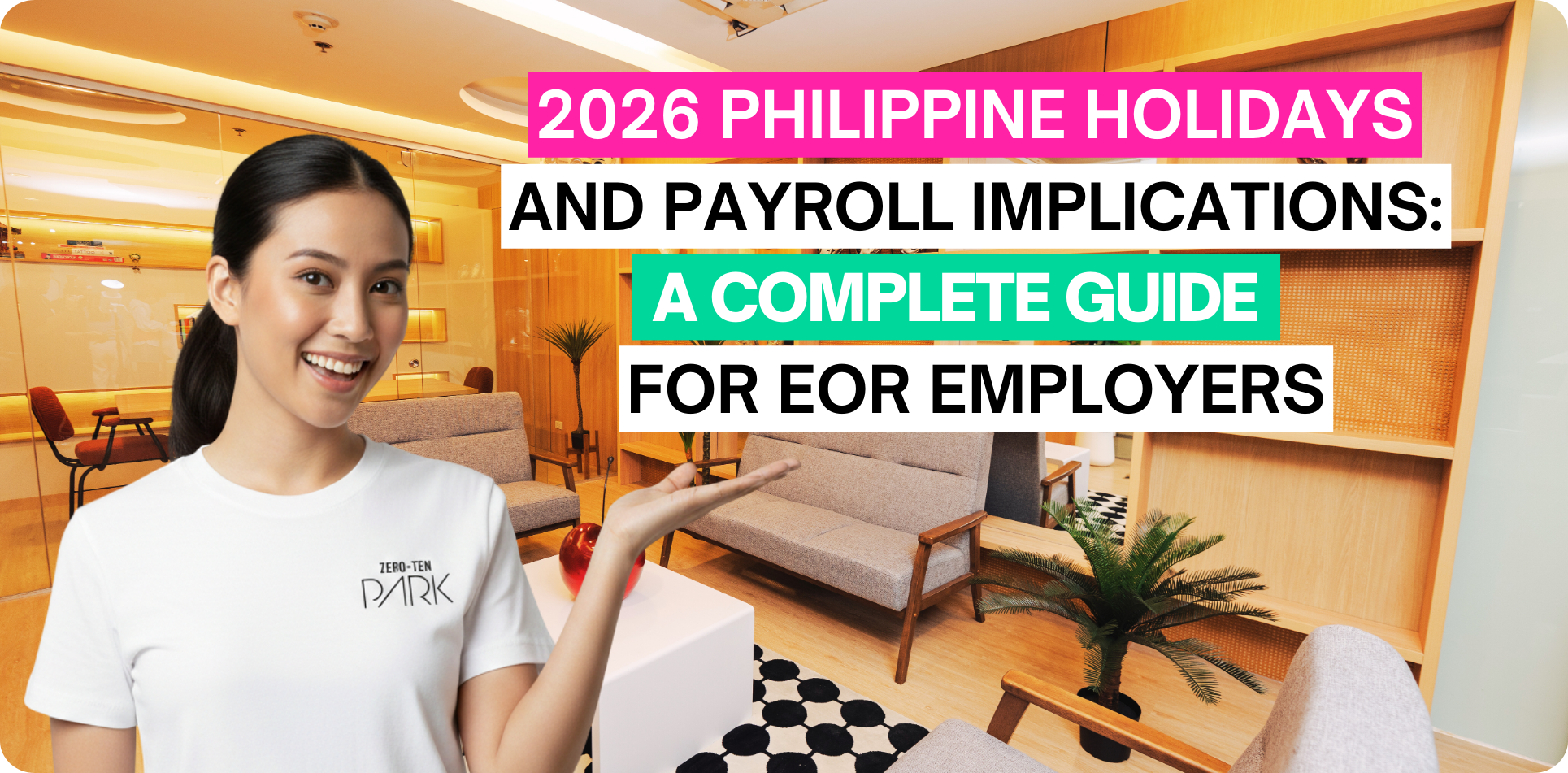
2026 Philippine Holidays and Payroll Implications: A Complete Guide for Employers

Understanding Philippine holidays is not simply a matter of scheduling time off. For employers, especially foreign companies employing staff through an Employer of Record (EOR), holidays directly affect payroll costs, statutory compliance, workforce planning, and employee relations.
This article serves as a comprehensive 2026 holiday and premium pay guide, written specifically for foreign employers with Philippine-based employees. It explains:
- The official 2026 Philippine holidays
- The legal pay rules for each holiday type
- How pay changes when employees work, do not work, or work overtime
- Cebu-specific local holidays that may affect operations
- Payroll considerations that are often overlooked
As an EOR provider, ZeroTen Park Philippines ensures that these rules are applied accurately, consistently, and in full compliance with Philippine labor law.
Why Philippine Holidays Have Payroll Impact
Under the Philippine Labor Code and Department of Labor and Employment (DOLE) issuances, holidays are classified into different categories. Each category carries specific pay obligations that employers must follow.
Misclassifying a holiday or applying the wrong premium rate may result in:
- Underpayment or overpayment of wages
- Employee disputes
- Compliance risks during audits
For foreign employers unfamiliar with local labor practices, these distinctions are critical.
Holiday Classifications in the Philippines
1. Regular Holidays
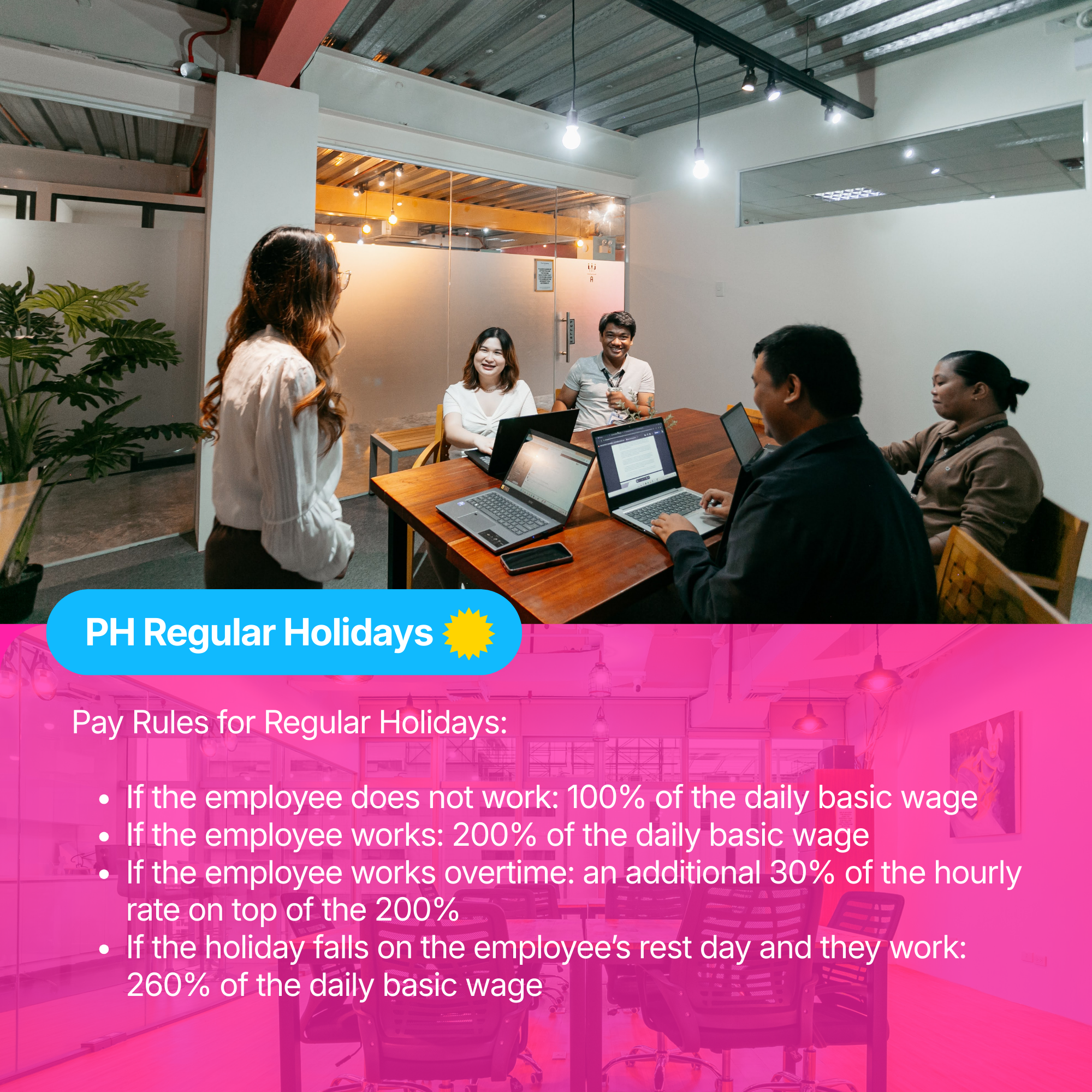
Regular holidays are nationally recognized holidays that provide employees with holiday pay even if they do not report to work, provided they are present or on paid leave the working day immediately before the holiday.
Pay Rules for Regular Holidays:
- If the employee does not work: 100% of the daily basic wage
- If the employee works: 200% of the daily basic wage
- If the employee works overtime: an additional 30% of the hourly rate on top of the 200%
- If the holiday falls on the employee’s rest day and they work: 260% of the daily basic wage
2026 Regular Holidays (Nationwide)
| Holiday | Date |
| New Year’s Day | January 1 (Thursday) |
| Araw ng Kagitingan | April 9 (Thursday) |
| Maundy Thursday | April 2 |
| Good Friday | April 3 |
| Labor Day | May 1 (Friday) |
| Independence Day | June 12 (Friday) |
| National Heroes’ Day | August 31 (Monday) |
| Bonifacio Day | November 30 (Monday) |
| Christmas Day | December 25 (Friday) |
| Rizal Day | December 30 (Wednesday) |
2. Special Non-Working Holidays
Special non-working holidays operate under the principle of “no work, no pay,” unless company policy, employment contract, or collective bargaining agreement provides otherwise.
Pay Rules for Special Non-Working Holidays:
- If the employee does not work: no pay (unless company policy grants payment)
- If the employee works: 130% of the daily basic wage
- If the employee works overtime: an additional 30% of the hourly rate on top of the 130%
- If the holiday falls on the employee’s rest day and they work: 150% of the daily basic wage
2026 Special Non-Working Holidays
| Holiday | Date |
| Chinese New Year | February 17 (Tuesday) |
| Black Saturday | April 4 |
| Ninoy Aquino Day | August 21 (Friday) |
| All Saints’ Day | November 1 (Sunday) |
| Feast of the Immaculate Conception | December 8 (Tuesday) |
3. Special Working Days
Certain holidays are declared as Special Working Days. These days do not require premium pay under Philippine law.
Pay Rules for Special Working Days:
- Work performed is paid at 100% of the daily basic wage
- No statutory holiday premium is required
While premium pay is not mandatory, some employers voluntarily provide incentives or leave credits to remain competitive in the labor market.

Key Cebu Holidays to Monitor
Cebu City Charter Day
- February 24
- Applies to businesses operating within Cebu City
Cebu Provincial Charter Day
- August 6
- Applies to businesses registered under the Province of Cebu
Sergio Osmeña Day
- September 9
- Applies to businesses registered under the Province of Cebu
Local holiday declarations are issued annually and may vary in classification. Employers should monitor LGU proclamations closely.
Additional Payroll Considerations
Holiday pay calculations may also be affected by:
- Overtime work
- Night shift differential
- Rest day alignment
- Company-specific holiday policies
- Client operational requirements across different time zones
Each of these factors must be correctly layered to ensure full compliance.
Important Disclaimer on Holiday Declarations
While this guide is based on the official 2026 Philippine holiday proclamation and existing labor regulations, employers should note that additional holidays or changes may still be announced throughout the year.
In the Philippines, the national government and local government units (LGUs) may issue supplemental or abrupt holiday declarations due to elections, special events, local festivities, or presidential proclamations. These announcements may occur with limited lead time and can affect work schedules and payroll computations.
Employers are strongly advised to:
- Monitor official government announcements regularly
- Stay updated on local (city or provincial) holiday declarations
- Coordinate closely with their EOR or payroll provider to ensure timely compliance
ZeroTen Park Philippines continuously monitors holiday proclamations and regulatory updates to help clients remain compliant and prepared.